
The reading list for 2025 was a heavy one for me. So much so, that I vowed the last one of the year would be a romance novel. As if romance is somehow less heavy? With all of the vowing and pushing and pulling, the last novel of 2025 still chose me. Shifting around the library my eyes saw blue ripples and the familiar name Ta-Nehisi. I must admit that reading Coates is no simple feat. He tackles issues ranging from spirituality to politics to history and family lineage. And he does not rush through…anything. His writing is patient, methodical, heart-felt and masculine. The Water Dancer was published in September of 2019. A childhood friend and I were speaking in jest the other day about how September babies were, of course, likely conceived under a mistletoe or an umbrella of new year’s fireworks. The Water Dancer is that baby – a parentage worth exploring, researching and a love that surpasses eros in order to ‘see what that agape do‘. I chose to listen this go ’round. Though the audio framework of literature ingestion is not normally my thing, once I recognized the voice of thee Joe Morton narrating this particular art-space, I was all in.
Hiram Walker is the main character of Coates’ debut novel set on and off a tobacco plantation in Virginia. He’s somewhat of a prodigy in that he has what we would today call a photographic memory. However, his memory is both the source of great gains and great losses, as recollections of happier times with friends and family are coupled with the the stains and stings of slavery. Hiram can remember everything but his mother’s face. Unimaginable – Hiram’s mother’s face, and the audacity of a slave society to utilize a boy’s recollections while at the same time harnessing that which he desires most in a way that taunts, bates and controls. Ta-Nehisi goes deep into the subconscious of Hiram and finds conduction – an otherworldly ability to move through space via a river of memory. Through Hiram’s gift of conduction he is connected to The Underground, Moses (Harriet Tubman), his mitochondrial lineage, and a sort of free servitude. Conduction is in essence movement of power between adjoining substances – sound waves are conducted, nerve impulses are conducted, heat is conducted, water is conducted (and conductor). And though Coates conducts The Water Dancer by way of a purposeful masculine gaze and mirror, his insertion of the female experience is also both purposeful and imperative to the movements of Hiram and the novel overall.
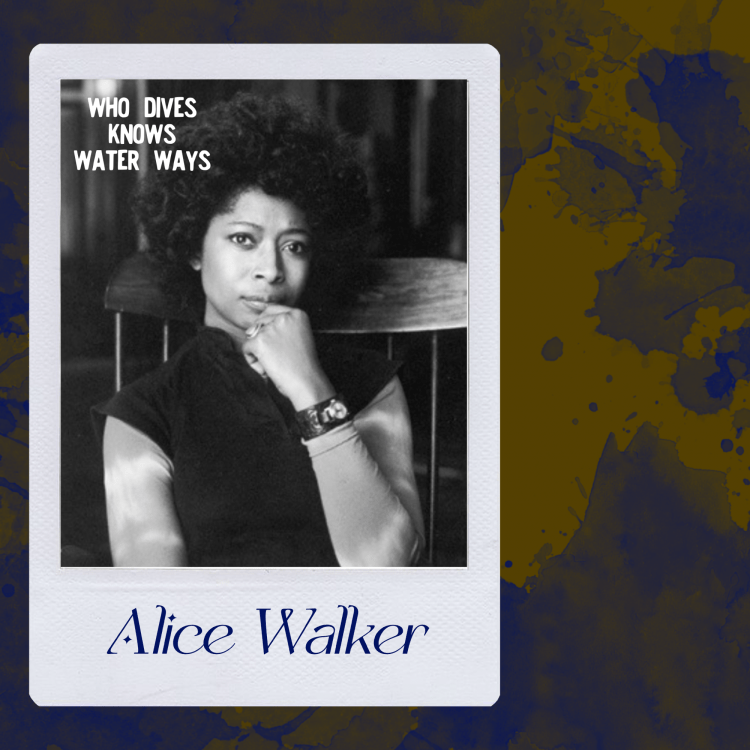
Through a vision of his mother (Rose) water dancing, Hiram crashes into the River Goose while crossing over the very bridge that many of his ancestors have crossed upon being sold to the Deep South (gone ‘Natchez Way’). Maynard (Hiram’s half-brother and appointed Master) dies; Hiram lives and the reader experiences Coates’ framework of conduction for the first time. The novel flows back in time to when Hiram is a child. Following the sell of his mother, Hiram is left alone before being taken in by Thena. Thena is an elder slave at Lockless. She too has been left alone after losing her husband to fever and having all of her children sold away. Unlike Hiram, her memories are all but buried in an effort to survive and Thena comes across as walled-off, brash to those without the wisdom or capacity to understand her. Whilst residing with Thena, Hiram is beckoned to The Big House of which his biological father Howell Walker is master and proprietor. His gifts of quick intelligence and memory are soon recognized and Hiram is assigned a tutor. However, the Lockless plantation aims to utilize such tutelage overall in service to Maynard – white, privileged, and natural nepotic benefactor of the Lockless estate. Coates continues to remind the reader that this is home to many of The Water Dancer’s main characters. And what it emotionally and practically means to have a home that would barter one’s talents, loved ones, safety, and overall peace. What is the root of such ideology? And is it something that can be dug up through sheer muscle power? Water pressure maybe? Or must we lament to…accepting it?
Hiram has his eyes set on Sophia (a reluctant concubine to Howell’s brother Nathaniel Walker). The two decide to run together after acquiring some surface knowledge of the Underground Railroad and its inclinations towards freedom. They are captured, placed in prison, and separated – Hiram, purchased by a sadistic slave-holder who makes literal sport of hunting human flesh, and Sophia, sent back to Lockless. Coates beckons the reader into this very weird world of choosing between bad and worse – a world that dares ask questions smothered in hypocrisy, betrayal, cruelty, sadism, and overall disgust. Though the order is obviously peculiar (and even ill), it is a sight to behold how the human psyche still clings to it when faced with chaos. It is tainted water to the deathly parched – it is poison. Hiram’s body eventually suffers injury and it is through this experience that the gift of conduction visits him yet again. He’s brought to Corrine Quinn, who has purchased him from his father following his attempt at running. Hiram learns of Corrine’s connection with the Underground and the agenda of her purchase as it pertains to his gift of conduction and how it might assist in freeing other slaves. Corrine’s positioning is…interesting. Though she would mainly be looked upon as a southern, white, female abolitionist, Coates frames her in a way that is quite complex. I did not particularly like her character and saw her as both perpendicular and adjacent to Ryland (the overseer of the Elm County jail) – the ideology forming a cross and thus inevitably an intersection of pure ick. However, I think Coates’ framework of Corrine’s character is purposefully gray; and makes for great exploration of the systems we depend on. She is next in line to inherit a sort of generational throne in Elm County and thus she has learned to be strategic whilst not letting go of her own privilege.
Hiram is sent to Philadelphia and works at headquarters for a year. While in Philadelphia, Hiram gains a new education of how the Underground works and is lead to a meeting with Harriet Tubman (Moses) who also has the gift of conduction. It is through his interactions with Moses that he learns of the ins and outs of emotional, mental and physical slavery and ultimately the connection between memory and water that sustains the power of conduction. Upon returning to Virginia under the guise of tasking, Hiram makes it known that his endeavors are to be rewarded via the freeing of both Sophia and Thena when the time is right. Lockless is no longer the same. The decline of the tobacco industry has resulted in a sort of wasteland manifest and Coates makes this evident in his comparable imagery of Lockless past and present. Hiram finds Sophia at Lockless once again, but this time she has mothered a girl child (Caroline) through her ‘relationship’ with Nathaniel Walker. Coates allows Hiram’s process of emotion to be seen and felt by the reader – the ups and downs of possession, the polarities of protection and setting free, the risks associated with loving for real, the nakedness of choice.
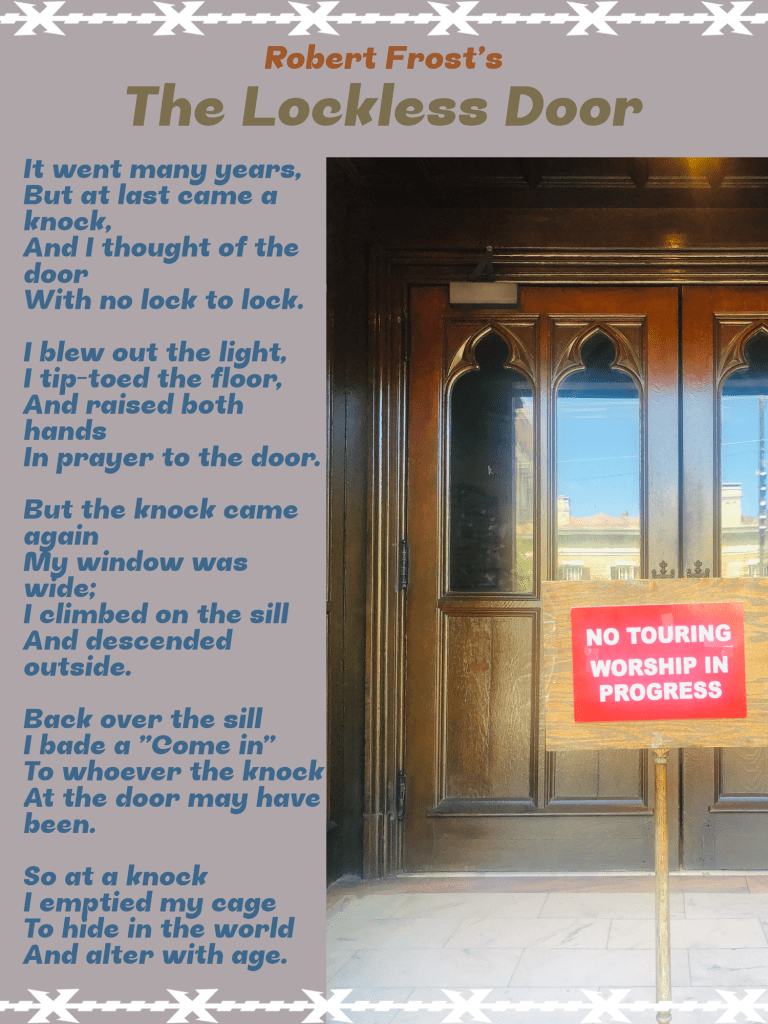
Hiram unlocks the full potential of his gift of conduction upon finding a shell necklace whilst back at Lockless. Upon touching the necklace the very painful memory of his mother being sold away floods Hiram’s psyche and he is now knowledgeable of who is responsible for the selling of his mother, and what she was exchanged for. It is this final knowledge coupled with his previous experiences that allow him the power to conduct Thena in the direction of her living daughter Kessiah (now, residing in Philadelphia). Coates’ description of this is fantastic and solidifies this work as not science fiction but very spiritual (in my opinion). For, it takes not only Hiram’s faculties to conduct her but also ancestors and even future pedigree. Thena is heavy. And Coates does a great job at depicting both the storm and the levy required to move a woman like Thena, with all she’s endured and overcome.
“There are years that ask questions and years that answer. “ -Zora Neale Hurston
Seventeen (an odd number) – doubled to rectify, to make even, to form 34 chapters of a circular journey made whole. The novel is coated in excellent imagery – running river water, deadly bridges, a necklace made of shells, a wooden carved horse gifted too soon. It is quite the scene – a dance indeed. To speak of structure/framework and movement in the same breath. In this novel, supposed sturdy (and dare I say…erect) institutions, foundations, alliances and establishments…dance (of all things). We see this dance in Coates’ portrayal of societal nepotism and spiritual nepotism. Again, I proclaim that this work is not of a specific genre and should be thought of as outside the boundaries of science fiction. Published one year prior to the pandemic, it is as if the world stopped and earth-quaked ever so subtly so that Hiram could remember his mother’s face, Thena could move in the direction of her children, Sophia could mother in any dimension, and Moses could part seas of many colors. Again, Coates would not be rushed. The Water Dancer is over 400 pages long and explores so many aspects of American society. These days, while so many seemingly progressives, orators and podcasters strongly urge ‘us’ to move past the slave narrative, it is works such as The Water Dancer asking the necessary questions (may I have this dance?) in a way that sets us up for a successful answer (yes, you may). Wishing all the readers a happy new year, a memorable MLK Day, and the glasses to see a love story unfold in due time. Most of all, I hope you dance (on the water, on fire, on air, even above ground; especially above ground). 😉 💃🏾 🕺🏿 🌊
Work(s) Cited:
Coates, Ta-Nehisi. (2019).The Water Dancer. United States: Random House / One World.
Frost, Robert. (1969). The lockless door. In E. C. Lathem (Ed.), The poetry of Robert Frost: The collected poems (pp. 174-175). Holt, Rinehart and Winston.
Hurston, Zora Neale. (1937). Their Eyes Were Watching God. J.B. Lippincott Company. Page 21.
Walker, Alice. (2003). A Poem Traveled Down My Arm. United States: Random House. Page 56.
 MAHism2026: prose, poetry, peculiarities...